Nani's Birthday
(WhatsApp In App Videos)
AI Image & Video Generation | 06 .2026 | Weavy
📚 Overview
The WhatsApp In-App Video Campaign introduces core and newly released features through relatable, culturally authentic storytelling. The goal was to build narratives grounded in real-world moments that show how people interact and stay connected on the platform across different cultures. This specific story centers on a multi-generational family scattered across different time zones, coming together via WhatsApp Video Call to organize a surprise birthday celebration for their Nani (grandmother).
My role was to create realistic image and video assets using AI, targeting an aesthetic that feels candid, unstaged, and user-generated. Achieving this required deep cultural research and careful attention to detail during initial prompt creation and generation. When working with AI, unexpected generation quirks and technical limitations are inevitable; instead of fighting the output, I approached these quirks creatively, using them as opportunities to pivot. Finally, I applied traditional compositing techniques as a finishing pass- refining integration, fixing artifacts, and elevating the final output to a seamless, broadcast ready standard.
💡 Challenges / Limitations
Navigating the complexities of AI can be a rewarding yet challenging journey. Throughout my experience, I handled various troubleshooting scenarios that tested my skills and understanding. From addressing unexpected outputs to refining for better accuracy, each challenge presented an opportunity for growth and innovation. Here, I’ll share notable examples of challenges I faced while working with AI, highlighting the lessons learned along the way.
• Motion Capture :

One of the hardest things to get right in AI generation is subtle human reaction. I constantly struggled to generate realistic micro-movements, like the slight nods and tiny expression changes of someone listening to a phone call. No matter how descriptive my prompts were, the performance always felt lifeless.
Then Weavy introduced reference video features from models that used to be ComfyUI exclusives. I tested them immediately. While there are still some technical limits around video length, driving the AI with actual footage captures those micro-expressions far better than text prompting ever could—provided your base acting is solid.
The bottom video is a comparison experiment testing all the reference-to-video models available in Weavy. The top right shows the actual reference footage of my acting that drove the final production shot.
Original Brand DNA
Hedley & Bennett has built its reputation in the US as the gold standard for culinary workwear - merging rugged utility with vibrant, accessible design. Before translating the brand for a new demographic, it was essential to establish this visual baseline: high-quality materials, bold color palettes, and professional environments.

Wan 2.2 Animate - Replace Wan 2.2 Animate - Move Kling Motion Control Kling o1 Reference Video to Video
• Fixing Low Res AI Artifacts :


Original low res image with ai artifacts. I generated a black & white sketch of the original image. New 3.5k image with adjustments Final image with compositing touch
Dealing with AI artifacts - like wavy textures and that artificial, over-sharpened look - is a constant battle. On fast turnaround projects, everyone often focus on the big picture first, only noticing these structural flaws later down the line. The core issue is that once a shot is approved for layout and lighting, you can't just hit "regenerate" to fix a small detail. Generative AI is notoriously bad at locking in overall consistency while making localized tweaks.
To solve this, I reverse engineered the workflow. I converted the problematic low-res frames into black-and-white sketches, using them as rigid structural guides for a new image generation with higher resolution. This allowed us to make targeted creative adjustments without breaking the approved composition. Finally, I brought the results into Nuke to add precise color correction, film grain, and traditional compositing techniques- bridging the gap between a raw AI generation and a polished final shot.


The original video on the left suffered from few issues: the subject's face morphed across frames, structural elements like the dog's leash warped and disappeared, and the subject's lighting felt disconnected from the environment.
Fixing video artifacts required similar, but a few additional steps than still images. I started by extracting a still frame to create a structural sketch. Using that sketch as a guide, I generated a clean base image, making sure to feed in a specific character portrait to lock down the facial consistency.
Once I generated the new video from that locked base, the structural issues were resolved, but the lighting still lacked that photorealistic integration. To bridge the gap, I extracted a matte from the footage and finished the shot using traditional compositing - dialing in the saturation and contrast to seamlessly seat the subject into the background.

•Achieving Physically Accurate Dynamics:


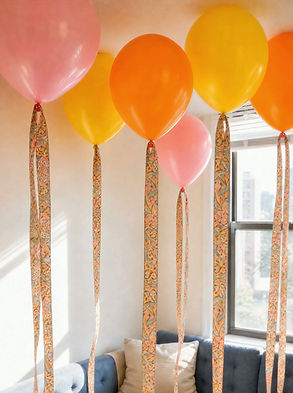


Much like capturing subtle facial expressions, getting AI to generate small, physically accurate animations is surprisingly difficult. For a B-roll shot, I needed helium birthday balloons interacting with one another. The movement had to feel alive, but not so dynamic that it became distracting.
The original prompt (shown in the left video) made perfect sense to a human, but AI models struggle with vague directives like "move very slightly." To fix this, I first created a color-blocked sketch to lock in the art direction. Then, I changed my prompting strategy to explicitly define the physics.
Instead of asking for "slight movement," I described the exact kinetic interaction: "As the orange balloon settles, the two balloons next to it are nudged gently, drifting only a few inches apart." This hyper-descriptive approach bypassed the AI's tendency to over-animate, resulting in perfectly natural, physically grounded dynamics that felt exactly like a real-life B-roll shot.